How Account-Based Events Work and Why They Outperform Traditional Event Marketing?
The Difference Between a Lead and an Account Signal
4/21/2026
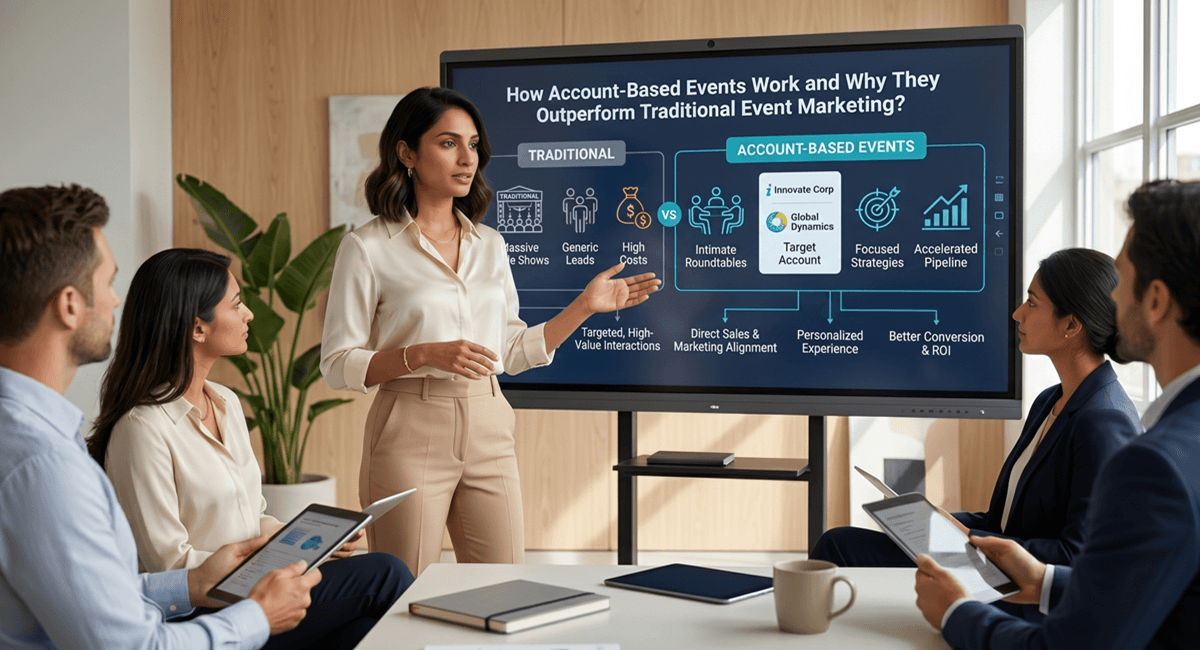
Traditional event
marketing counts heads. Account-based event marketing reads rooms. The shift
from measuring how many people attended to understanding which accounts are
moving is one of the most consequential changes happening in enterprise B2B
marketing right now.
The Difference Between a Lead and an Account Signal
When a marketing qualified lead
attends your event, you know one person showed interest. When three people from
the same company attend your event — one from procurement, one from IT, and one
from senior management, you are looking at a buying group in motion.
Those are very different signals,
and they require very different responses. The first warrants a nurture
sequence. The second warrants a direct conversation with a named account
executive who knows the context.
Account-based events are designed
to surface the second type of signal reliably, not occasionally.
How ABM Teams Redesign Their Events
An account-based approach to
events begins before the event is designed. It starts with a defined account
list typically the organizations your marketing and sales team have agreed
represent the highest-priority opportunities and works backwards from there.
Which session topics are most
relevant to these accounts' known challenges? Which speakers carry credibility
with the senior stakeholders at these organizations? Which formats roundtables, workshops, executive briefings create the conditions for the kinds
of conversations that move an account relationship forward?
The goal is not to fill the room.
It is to fill the room with the right accounts and to make sure that everything
those accounts engage with during the event feeds back into their account
record.
What Account-Level Measurement Looks Like
Measuring an account-based event
means looking at the account view, not just the individual view. For each
target account, you want to know: how many people attended? Which sessions did
they choose? Did they request a meeting? Did they visit the same booth more
than once? Did their engagement increase from day one to day two?
That pattern increasing
engagement from multiple people at the same account across multiple touchpoints is a strong predictor of account readiness. It tells you something that no
individual lead score can: this account is exploring seriously, not just
sending one junior person to collect brochures.
The First-Party Data Advantage
Organizations that run their own
events hold an advantage that is not available to teams that only attend
third-party events: they own the engagement data. First-party event
intelligence is richer, more accurate, and more actionable than almost any
purchased intent data available in the market.
The teams building event
intelligence systems are creating a compounding asset. Each event they run adds
another layer of account intelligence to their understanding of the market who is exploring, who is stalling, and who is ready to move.
Conclusion
Account-based events are not a
more complicated version of traditional event marketing. They are a
fundamentally different way of using an event as a signal-generating system
that feeds your account strategy, rather than a lead-generating moment that produces
a list you need to sort through.
